Two-year-olds learn mostly through play. They explore with their hands, their voices, and their whole bodies. In a good two-year-old room, play is planned with care so every activity builds on the last one.
Why Play Matters at Two
At this age, a child is figuring out how the world works. A block falls over. A crayon makes a mark. A song comes back around. Each moment teaches something new. Play gives your child a safe way to try ideas, make choices, and learn from results.
Play also helps children feel confident. When a child can pick an activity, try it, and finish it, they start to trust their own abilities. That trust carries into every part of the day.
Art Builds Hands and Ideas
Art at two is messy and wonderful. Children hold crayons, press stickers, dip sponges in paint, and squish playdough. These activities help small hands grow stronger and more controlled. They also give your child a chance to make choices about color, shape, and placement.
Do not worry about the final picture. At this age, the process matters more than the product. A scribbled page is a real accomplishment, and it is worth celebrating.
Music and Movement
Songs, finger plays, and dancing are a big part of the day for two-year-olds. Music helps children learn rhythm and sound. Movement helps them practice balance, jumping, and clapping. Many children also start to copy words and sounds during songs, which makes music a natural bridge to language.
Try singing a favorite song at home. Pause before the last word and let your child fill it in. Simple games like this are easy to repeat in the car, at bath time, and at the grocery store.
Blocks, Stacking, and Early Math
Blocks are a favorite for good reason. Stacking teaches balance and planning. Sorting blocks by color or size builds early thinking skills. Counting how many blocks fit in a tower or saying which tower is taller introduces math ideas in a way that feels like fun.
You can use the same ideas at home. Ask your child to hand you the big cup or the small spoon. Count stairs as you climb them. Simple questions like these make early math part of everyday life.
Dramatic Play Teaches Turns and Feelings
Pretend play is where toddlers practice the world around them. A play kitchen becomes a restaurant. A doll needs a nap. A toy phone rings, and your child has a long conversation. This kind of play helps children copy adult routines, share space with friends, and take turns.
It also gives children a safe place to express feelings. When a child pretends to comfort a teddy bear, they are practicing kindness. When they pretend to be upset, they are learning to name emotions.
Two Languages in Daily Routines
Our programs are bilingual English-Spanish immersion in every classroom, from infant care through VPK. Children hear both languages through songs, stories, meals, and daily routines. Sign language is also used with infants and toddlers, which gives young children another way to communicate.
Immersion does not mean pressure. Children absorb language at their own pace. Some speak more at first, and some take time before they start to talk. Both are normal. Teachers keep the tone calm and encouraging so every child feels comfortable trying new words.
Follow Up at Home
The best learning continues after school. You do not need special materials to support your child. A few simple habits make a difference.
- Read the same picture book again and again, and let your child turn the pages.
- Name colors, animals, and shapes in English and Spanish during everyday moments.
- Sing the songs your child learned at daycare, and let them lead the actions.
- Ask open questions such as, what did you build today, instead of yes or no questions.
- Let your child help with simple tasks, like putting toys in a bin or wiping a table.
Keep the tone relaxed. Short, happy moments count more than long lessons.
What to Look For on a Visit
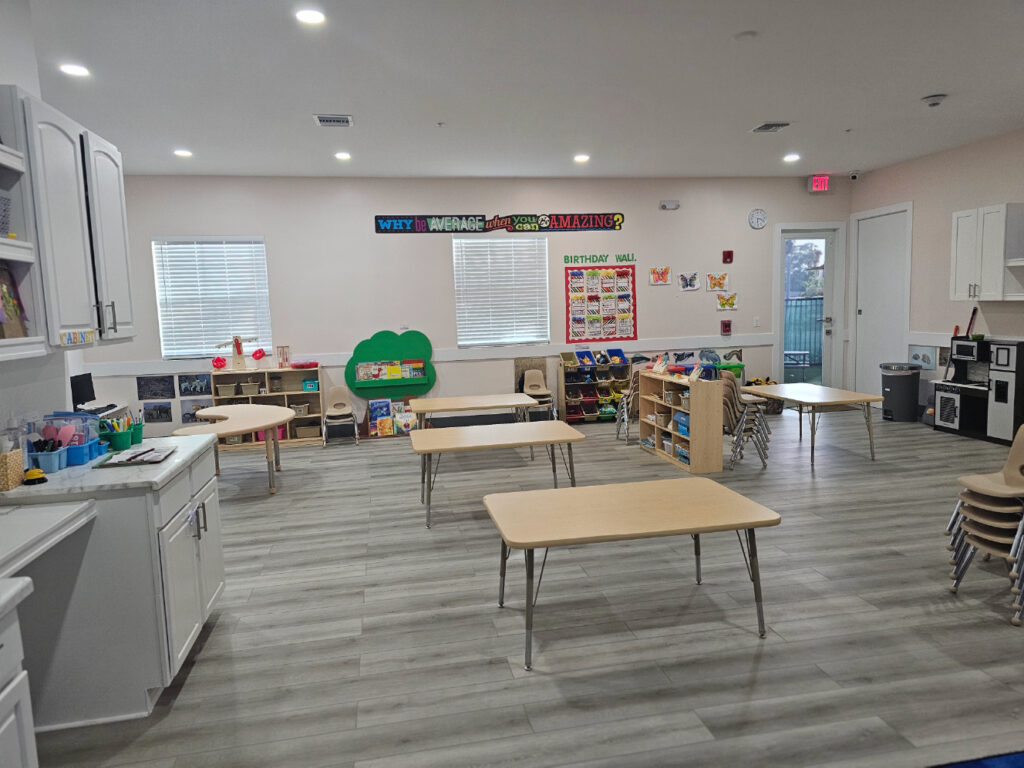
Parents are welcome to tour, and our open-door policy invites visits. A tour is the best way to see the classroom in action. Look at how the teachers talk with the children, how the room is arranged, and how the children move from one activity to the next. Notice whether the children seem calm and engaged.
Ask about safety and daily routines too. Our premises are video-monitored, and a closed-circuit intercom connects the classrooms. We have private parking and a synthetic-turf playground for outdoor play. Ask how the day is structured, how teachers share updates at pickup, and how they support children during drop-off.
Questions to Ask
- What does a typical day look like for a two-year-old?
- How do teachers use both languages during play?
- How do you help children who take longer to settle in?
- How will I hear about my child's day?
Ask about openings when you call. Our team can tell you whether a class or seat is available right now.
Visit My First Place Academy
My First Place Academy is a bilingual English-Spanish daycare and preschool in Port St. Lucie. We are owner-run, and the owners are involved day to day. We offer programs for infants, one, two, three, and four year olds, along with VPK, before and after school care, and summer camp. Families in our programs can see how each age group grows, and families from St. Lucie West and Tradition are welcome to visit.
Parents are welcome to tour. We are open Monday to Friday, 6:30am to 6:00pm. Call (772) 446-4011 to ask about openings, plan a visit, or talk through what your child needs.
Frequently Asked Questions
How do two-year-olds learn at daycare?
Mostly through play. Art, music, blocks, and pretend play help children try ideas, make choices, and build early skills. Teachers plan activities so each one builds on the last.
Will my child learn two languages at once?
Our classrooms use English and Spanish every day through songs, stories, and routines. Children learn at their own pace, and teachers keep the tone calm and encouraging.
What can I do at home to support play?
Read picture books together, name things in both languages, sing songs, and ask open questions. Short, happy moments often work better than long lessons.
Can I visit before I enroll?
Yes. Parents are welcome to tour. Call (772) 446-4011 to plan a visit and ask whether a class or seat is open.
Call (772) 446-4011 to ask about openings
Call My First Place Academy or schedule a tour and see the classrooms in use.