Early literacy for a three-year-old starts with everyday moments, not flashcards. Story time, letters on cereal boxes and pretend play all build the skills that later help a child learn to read. This guide shares simple habits that parents in Port St. Lucie can use at home.
What Early Literacy Looks Like at Age Three
At three, children are learning that words carry meaning. They are building vocabulary, listening to longer sentences and starting to tell simple stories. Many children this age begin to recognize their own name and a few familiar signs. Progress is uneven, and that is normal. Your job is to make language part of the day, in a warm and relaxed way.
Make Story Time a Daily Habit
Reading together is one of the most useful habits you can build. Pick a regular time, such as after bath or before naps, so it feels predictable. Let your child choose books some days. Point to pictures and ask simple questions like What is the dog doing? Short, happy sessions work better than long lessons.
Ask Questions, Not Just Read the Words
Talk about the pictures as you read. Ask what might happen next, or how a character feels. Repeat favorite lines and let your child finish the sentence. This back-and-forth helps children learn that books are a conversation. It also builds the listening and speaking skills that come before reading. Pause after a question and give your child time to answer. The answer may be one word, a point or a sound, and each response is a step toward full sentences.
Find Letters in Everyday Life
Letters are everywhere. Point out the first letter of your child's name on a cup or a mailbox. Read signs on the way to the park. Look at the letters on a cereal box together. Keep it playful. Say the sound a letter makes rather than its name, since sounds are what help children sound out words later. Do not turn this into a test.
Use Pretend Play to Build Stories
Pretend play is storytelling in action. A child who plays shop, doctor or a family dinner is practicing sequence, roles and new words. Join in when invited. Ask, What should we do next? Then let your child lead. Props like a toy phone, a notepad or a play menu give words a purpose. Children often talk more during play than at any other time of day.
Sing, Rhyme and Play With Sounds
Songs and rhymes help children hear the parts of words. Clap the syllables in a name. Play a simple game where you say two words that rhyme and ask your child to find a third. Nursery rhymes have lasted for a reason. They are short, repetitive and easy to remember, which makes them ideal for a three-year-old.
Talk and Listen in More Than One Language
Families in Port St. Lucie may speak more than one language at home, and that is a real strength. Children can learn words in each language through the same routines, like reading, singing and cooking together. Keep talking in the language you are most comfortable using. Consistency matters more than perfection.
At My First Place Academy, classrooms use complete bilingual English-Spanish immersion from infants through VPK. Children hear both languages through the school day, in stories, songs and play. Learn more about our programs for every age.
What to Look for in a Classroom
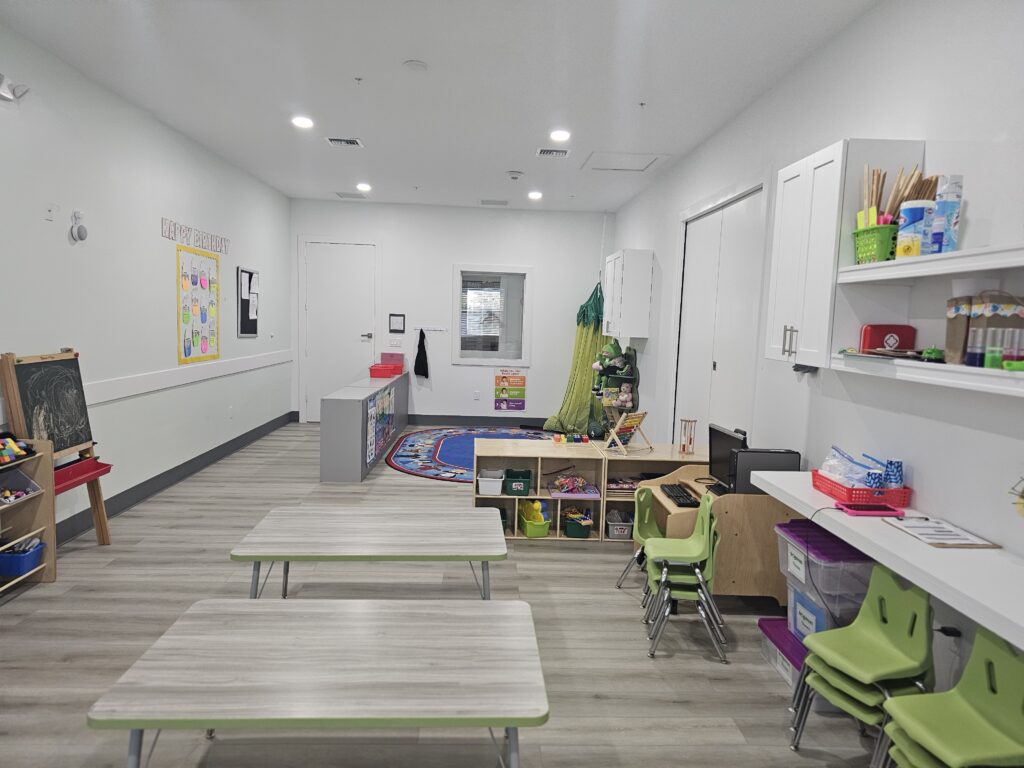
When you tour a program, watch how teachers read with children. Look for books within easy reach, songs during transitions and adults who talk with children at their level. Ask how the day includes stories, play and conversation. If you are still comparing options, this guide to choosing a daycare in Port St. Lucie covers the questions to bring along.
Keep Reading Fun on Busy Days
Some days are rushed, and that is fine. A single book read at the kitchen table still counts. Try keeping a small basket of books in the car or near the front door, so reading can happen while you wait in line at the grocery store. Let your child turn the pages and point to what they see. Enthusiasm matters more than the number of books. Ask a grandparent or family friend to read along on a video call, too.
Small Habits, Big Gains
You do not need special materials to support early literacy. Reading, talking, singing and playing are enough. Pick one or two habits to start this week, and build from there. Patience matters. Children learn at their own pace, and every conversation counts.
Sign language is also part of daily life for infants and toddlers in our classrooms, which gives children another way to communicate while their words grow. Small routines like this add up over time.
Talk With Us About Your Child
Every child learns in a different way. If you want to see how a three-year-old day works, our team is happy to answer your questions. Parents are welcome to tour, and our open-door policy invites visits.
Call My First Place Academy at (772) 446-4011 to ask about our three-year-old program, schedule a tour or check on openings. Our Port St. Lucie team is glad to help you find the right fit.
Frequently Asked Questions
What should a three-year-old know before preschool?
There is no test. Interest in books, simple talking and pretend play are all good signs. Children grow at their own pace, so do not worry about comparing.
How much reading is enough each day?
Even ten minutes of reading together can help. Short, regular sessions are better than one long session once a week.
Do the classrooms use Spanish too?
Yes. My First Place Academy uses complete bilingual English-Spanish immersion in every classroom, from infants through VPK.
Can I visit the classroom before enrolling?
Yes. Parents are welcome to tour. Call (772) 446-4011 to schedule a visit.
Call (772) 446-4011 to ask about our programs
Call My First Place Academy or schedule a tour and see the classrooms in use.