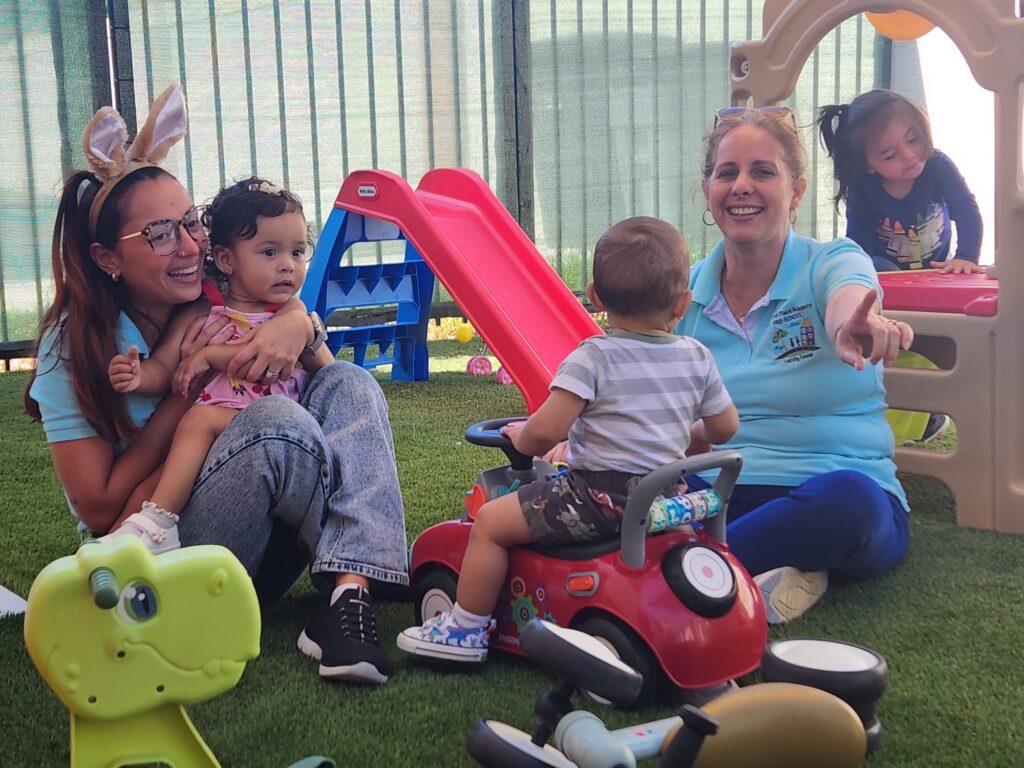
A one-year-old's day at daycare is built around play, meals, rest, and a steady routine. Your child can explore toys, sing songs, practice feeding themselves, and take a nap. Predictable days help little ones feel safe, which makes it easier for them to learn and settle in.
Arrival and Settling In
Most mornings start with a quiet welcome. Teachers greet your child, check in, and help them settle into the room. Some children wave goodbye happily. Others need a little more time with a favorite toy or a familiar song. Both reactions are normal. Ask your child's teacher how drop-off usually goes so you know what to expect.
Play That Builds Skills
Play is the main work of a one-year-old. Children stack blocks, push toys, look at books, and explore different textures. Sensory play, such as soft fabrics, bins of safe objects, and supervised water play, helps little ones use their senses. Each activity builds balance, grip, and curiosity.
Look for a room with a mix of quiet and active choices. A child who can choose between a puzzle, a shape sorter, and a ball can practice many skills in one morning.
Songs, Talking, and Sign Language
Songs and rhymes are a big part of a toddler day. Repeated songs help children learn words, rhythm, and taking turns. Sign language is used with infants and toddlers at our center, so children can show what they need before they can say it. Simple signs for words like more, milk, and all done can cut down on frustration.
Language grows with conversation. Name objects, describe what your child is doing, and read together at home too. Our classrooms are bilingual, with English and Spanish woven into songs, play, and daily routines.
Self-Feeding and Mealtimes
Around this age, many children start to feed themselves with their fingers and a spoon. Expect some mess. That is part of learning. Mealtimes are also a chance to talk and enjoy food together. Meals at our center are coordinated with the Florida Department of Health, so ask about the menu and how mealtimes work during the day.
Naps and Quiet Time
Rest matters at this age. Children often nap at a set time and need quiet time to recharge. A calm room and a steady routine make naps easier. Every child is different, so ask how your child's rest is handled, and share what works at home.
Why Routines Build Security
Routines tell a child what comes next. When the day follows a pattern, a toddler can predict the next step and feel more secure. Predictable days also help children handle change, like a new friend or a longer play time. Routines help parents too, because they make transitions at home easier.
Try a simple routine at home. Keep wake-up and bedtimes close to the daycare schedule when you can. Use the same goodbye words each morning. Consistent steps help your child shift between home and daycare.
Safe Spaces and Easy Drop-Off
Our premises are video-monitored, and classrooms connect by closed-circuit intercom. The playground has synthetic turf, and private parking makes drop-off easier for busy families. Ask to see these spaces when you tour, so you know how the day is set up.
Preparing Your Child for the Day
Plan a few minutes at home to help your child get ready. Talk about daycare in simple words before the first day. Tell your child who will be there and when you will come back. Keep your voice calm, even if your child fusses at drop-off. Children pick up on your mood, so a relaxed goodbye helps.
Keep packing simple. Pack a change of clothes and any comfort item the center allows. Label clothing and bottles so teachers can return items quickly. Ask the center what it needs from you each day, so you are not guessing.
What to Look for on a Visit
- Clean, bright classrooms with age-appropriate toys within reach
- Teachers who get down to a child's level and talk through each step
- Songs, books, and sign language used throughout the day
- A calm, predictable flow, with time for play, meals, and rest
- A clear way to share updates about your child's day
Questions to Ask
- What does a typical day look like for one-year-olds?
- How is sign language used in the classroom?
- How are naps and meals handled?
- How do you help children settle after drop-off?
- What is the easiest way to get updates about my child?
Visit and Ask About Openings
Seeing a classroom in person tells you more than any description can. If you live in Port St. Lucie, Stuart, or Jensen Beach, a short visit is an easy way to see the room. Our one-year-old program follows a steady daily routine, and you can learn about each age group on our program pages. Learn more about the people behind the center on our about page.
Our owners, Veronica and Aracelly Forero, are involved in the center day to day. We are open Monday to Friday, 6:30am to 6:00pm. Parents are welcome to tour, and our open-door policy invites visits. To ask whether a spot is open or to plan a tour, call My First Place Academy at (772) 446-4011.
Frequently Asked Questions
What does a one-year-old do all day at daycare?
Most of the day is play, songs, meals, and rest, with time to explore toys and textures. Ask the teachers how the day is structured in the room your child will join.
Is sign language used with toddlers?
Yes. Sign language is used with infants and toddlers at our center, so children can show what they need before they can talk.
How do I help my child settle in at daycare?
Keep goodbyes short and consistent. Use the same words each morning, and ask the teacher how drop-off usually goes so you know what to expect.
How do I find out if a spot is open?
Call My First Place Academy at (772) 446-4011. Spot availability changes, so the team can tell you what is open right now.
Call to ask about our one-year-old program
Call My First Place Academy or schedule a tour and see the classrooms in use.