Your child is ready for VPK when they can follow simple routines, listen to a group, and take care of some everyday tasks with a little help. Readiness is about feeling comfortable at school, not about knowing every letter or number. If you are a parent in Fort Pierce wondering about this step, this checklist can help you see where your child is today.
What VPK Readiness Really Means
VPK, or Voluntary Pre-Kindergarten, is a program for four-year-olds. It is meant to help children build the skills they need for the next step in school. Children learn through play, songs, stories, and group activities. They also learn to share a room with other children and to follow a daily schedule.
Many parents think readiness means reading or writing. In most classrooms, those skills grow over time. What matters most in the beginning is how your child handles the day.
Signs of Readiness: Routines
Look at how your child handles the rhythm of the day. A child who is ready can usually:
- Move from one activity to another with some reminders.
- Sit with a group for a short story or song.
- Wait a short time for a turn, even if it is not easy.
- Clean up toys when asked, with help if needed.
- Settle into a daily pattern, such as meals, rest, and outdoor play.
Children who are not yet ready may struggle with change. That does not mean they cannot learn. It means they may need more time to adjust, and a calm plan at home can help.
Signs of Readiness: Listening and Understanding
Listening is a big part of classroom life. A ready child can often follow two-step directions, such as "put your shoes by the door, then wash your hands." They may not do it perfectly, but they understand what is being asked.
Notice how your child expresses needs. A ready child can tell you when they are hungry, tired, or hurt. They can also use words, gestures, or simple sentences to ask for help. Your child does not need perfect speech, but they should be able to make themselves understood.
Signs of Readiness: Self-Help Skills
Self-help skills make the school day smoother for everyone. Look for these everyday abilities:
- Putting on a jacket or shoes with some help.
- Opening a snack container or a lunch box.
- Washing hands with a reminder.
- Asking to use the bathroom and taking care of basic steps with some help.
- Recognizing their own belongings, such as a backpack or water bottle.
You do not need a child who does everything alone. Teachers expect some help, and they will guide your child through new tasks.
Signs of Readiness: Play and Social Skills
Play tells you a lot about how your child is growing. A child who is ready often plays alongside other children, even if they are not yet playing together. Over time, they begin to share, take turns, and join simple group games.
Some children are shy at first. That is normal. A child who watches before joining in is not behind. They are learning how the room works. Give them time, and talk with the teacher about what helps your child feel safe.
What Readiness Is Not
Readiness is not perfection. Many capable four-year-olds still cry at drop-off, forget their shoes, or need a reminder to wash hands. Readiness is also not about knowing all of the alphabet or counting to a high number. Those skills grow through play and daily practice in the classroom.
Do not compare your child to others. Children grow at different speeds. A child who seems quieter or slower in one area may be strong in another. Look at the overall picture, and check in with your child's teacher if you have concerns.
How a Four-Year-Old Classroom Helps
A good four-year-old classroom builds readiness step by step. Children practice routines every day, so they know what comes next. They have group time for stories and songs, and they have play time to try new ideas. They also learn to speak up, ask for help, and solve small problems with friends.
At My First Place Academy, our classrooms are bilingual English-Spanish immersion from infant care through VPK. If your family speaks Spanish at home, your child can keep that language strong while learning a new routine. If your family speaks English, your child will hear both languages in a warm setting. Either way, a bilingual classroom can build language skills and confidence.
Simple Ways to Prepare at Home
You do not need a special curriculum to get ready. Try these ideas:
- Keep a simple daily routine, with the same order for meals, bath, and bedtime.
- Read together every day, and let your child turn the pages.
- Practice putting on shoes, washing hands, and cleaning up toys.
- Play turn-taking games, such as rolling a ball back and forth.
- Talk about school in a calm, positive way, and visit the school together if you can.
Keep your tone warm and steady. Children often pick up on a parent's worry, so a calm message helps them feel ready.
Questions to Ask When You Visit
Parents are welcome to tour, and our open-door policy invites visits. As you look at programs, ask questions that help you understand daily life:
- What does a typical day look like for four-year-olds?
- How do teachers help children move between activities?
- How will you communicate with me about my child's progress?
- What happens if my child is shy or upset during the first weeks?
- How do you support a child who speaks a different home language?
- What are your hours, and how does before and after school care work?
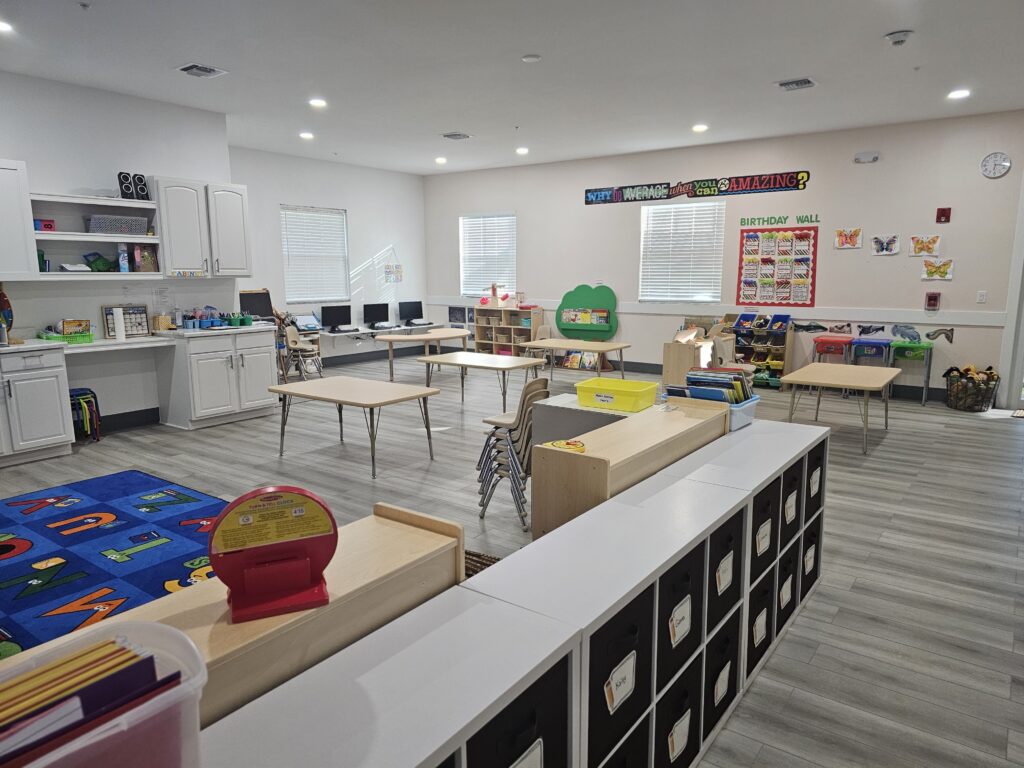
Notice how the room feels. A calm, friendly setting makes it easier for children to learn and for parents to relax.
Visit Our Port St. Lucie Campus
My First Place Academy is a bilingual daycare and preschool in Port St. Lucie, serving families in Fort Pierce and nearby areas. We are open Monday to Friday, from 6:30am to 6:00pm. Our premises are video-monitored, with a closed-circuit intercom between classrooms, private parking, and a synthetic-turf playground. VPK is offered through a partnership with the Early Learning Coalition, and VPK is free for eligible Florida four-year-olds.
Learn more about our programs for every age, or read our guide on VPK in St. Lucie County.
Call (772) 446-4011 to ask about tours, VPK enrollment information, or current openings. We are happy to answer your questions and help you decide what fits your child.
Frequently Asked Questions
What is the difference between VPK and daycare?
VPK is a pre-kindergarten program for four-year-olds that focuses on school readiness. Daycare covers a wider range of ages and care needs, including before and after school care.
Does my child need to read before starting VPK?
No. Reading and writing skills grow over time in the classroom. Routines, listening, self-help, and play matter more at the start.
Is VPK free?
VPK is free for eligible Florida four-year-olds. It is offered through a partnership with the Early Learning Coalition. Call (772) 446-4011 to ask about eligibility and enrollment information.
What if my child is shy or cries at drop-off?
Many children feel this way at first. Talk with the teacher about what helps your child, keep goodbyes short and calm, and give your child time to settle in.
Call to ask about VPK and tours
Call My First Place Academy or schedule a tour and see the classrooms in use.